


The Web Is Splitting in Two: One Layer for Agents, One Layer for Humans
A recent article about The Economist caught my attention.
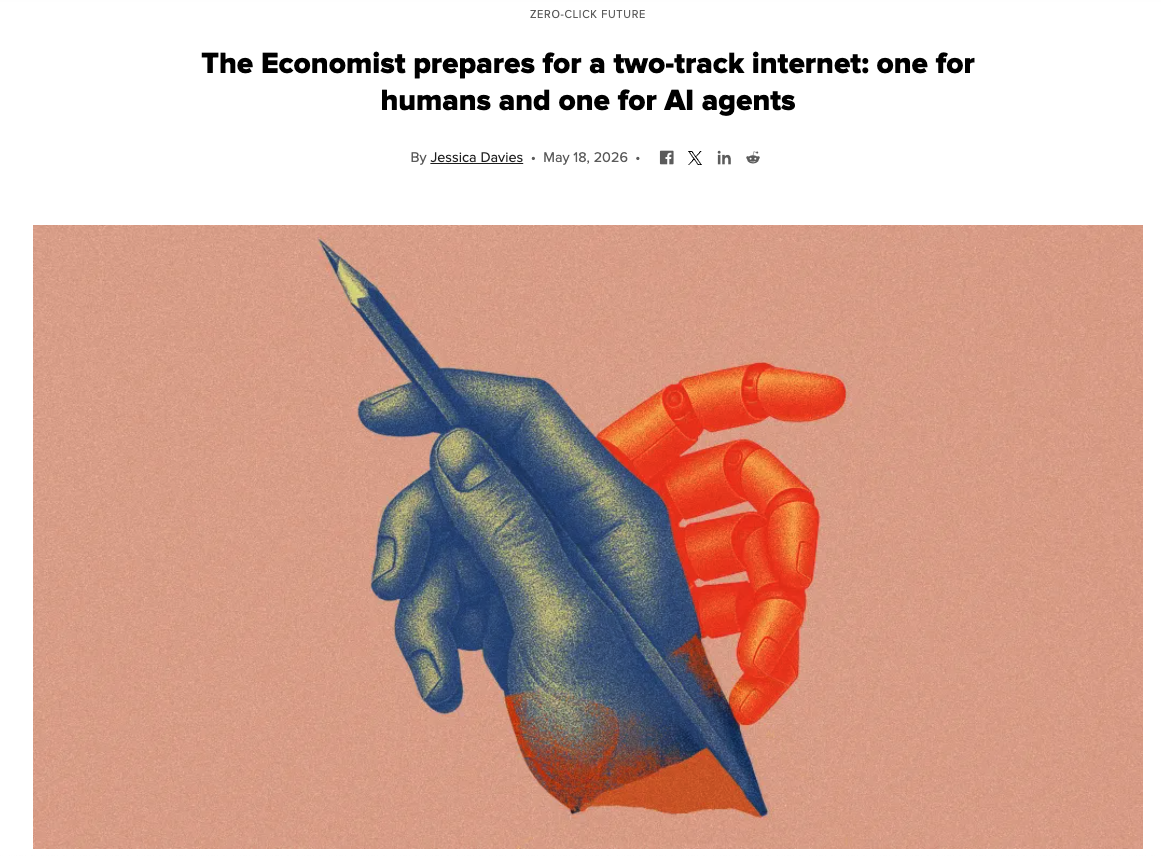
The publisher is experimenting with new ways of structuring content so it can be read more easily by AI agents. Not as a beautiful editorial feature, a homepage module or an interactive graphic, but as something clear, structured, text-based and legible to AI systems that may increasingly sit between the user and the web.
The idea makes sense. If discovery increasingly starts in ChatGPT, Gemini, Claude or another AI system, then brands and publishers need to make sure their content can be understood, surfaced and represented accurately by those systems.
If a potential corporate customer asks an AI assistant, “What is the best publication for senior executives to understand global affairs?”, The Economist wants to show up correctly. If a student asks, “Is The Economist worth subscribing to for politics and economics?”, it wants its value proposition to be understood. If a media buyer asks, “Which publications reach globally minded business leaders?”, it wants the answer engine to understand the audience, the product and the pitch.
In other words, The Economist is preparing for a world where the user may not start on its homepage, in Google, or in the publisher’s own search box. The user may start with an AI agent.
That is a big shift. But I think the most interesting part is not simply that publishers need to optimize for agents. The more important point is that the web is beginning to split into two layers.
One layer is for agents: structured, explicit, machine-readable and easy to reason over.
The other layer is for humans: rich, visual, branded, emotional, exploratory and designed to build trust.
The mistake would be to assume that the first layer replaces the second. It does not. It makes the second more important.
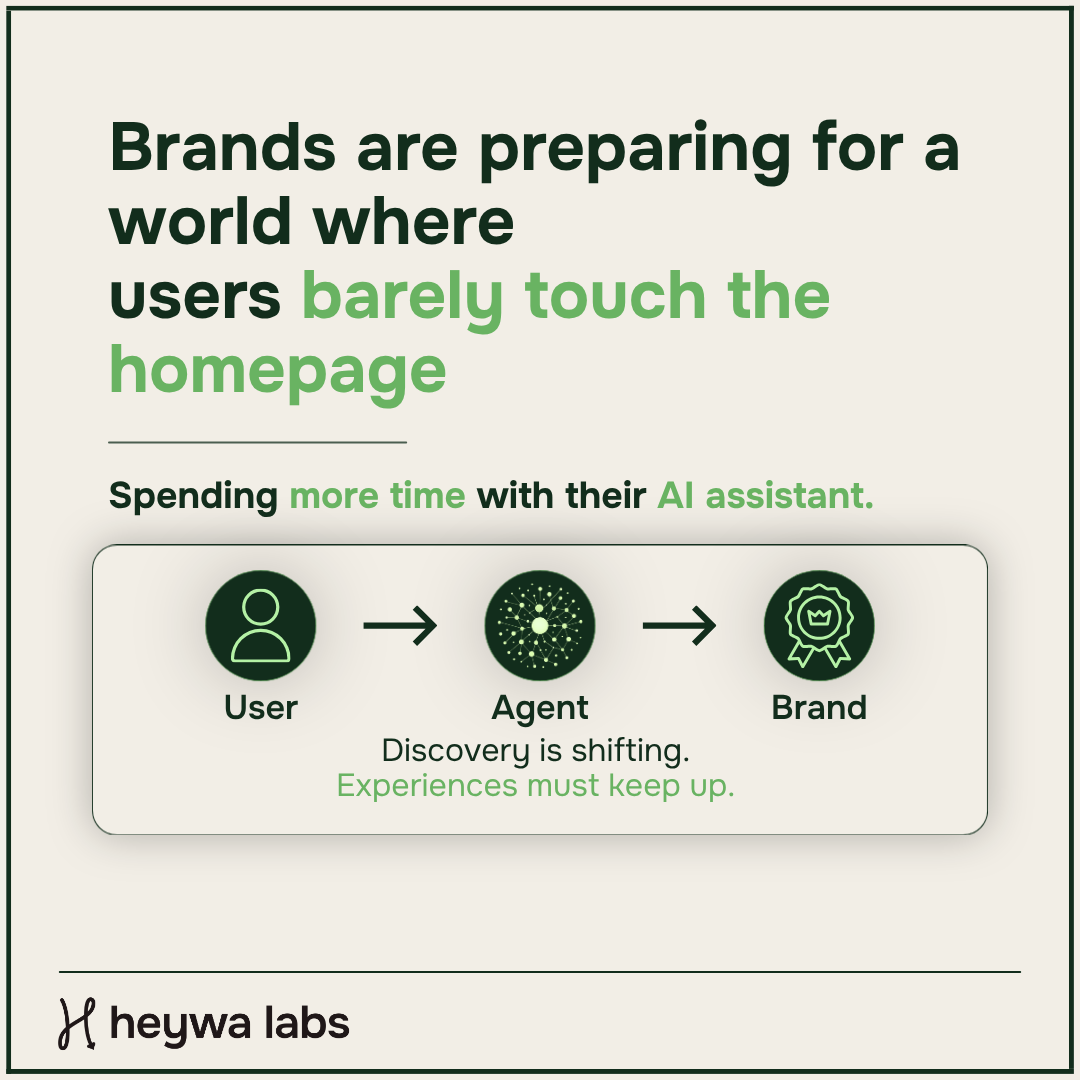
Agent-readable is not the same as agentic UX
There is a lot of confusion around the word “agentic”.
In many conversations, agentic seems to mean removing the user from the experience. The agent understands what you want, goes away, completes the task, and returns with an answer or outcome.
That can be useful in some cases. If I ask an agent to renew my parking permit, chase an invoice or find a time that works for a meeting, I probably do want the interaction to disappear as much as possible.
But many high-value online journeys do not work like that.
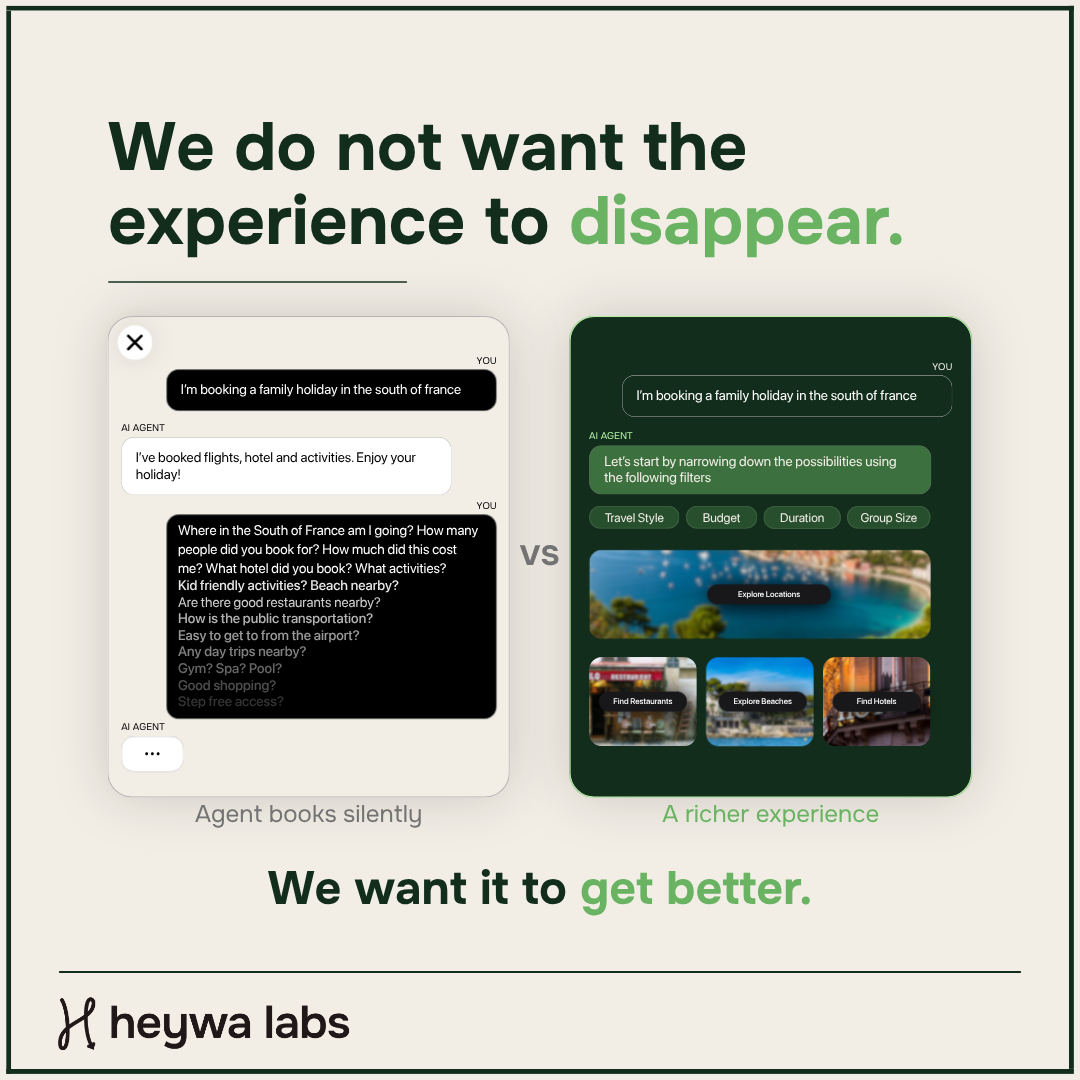
If I am planning a holiday, I do not simply want an agent to silently book something. I want to compare places, imagine the trip, understand the tradeoffs, see the hotel, explore the neighbourhood and feel confident that this is the right choice.
If I am buying a dress for an important event, I do not simply want an agent to pick one. I want to see options, understand the fit, compare the styling, imagine how I will feel in it and decide whether it matches the occasion.
If I am choosing what to read to understand a complicated topic, I do not simply want a summary. I may want a path through the material. I may want context, depth, point of view and a sense of why this source is worth trusting.
In those cases, the user does not want the experience to disappear. The user wants the experience to get better. That is why agent-readable content is not the same thing as agentic UX.
Agent-readable content helps machines understand what exists. It is a discovery and interpretation layer. It gives AI systems the structure they need to retrieve facts, compare options and route users correctly.
Agentic UX is different. Agentic UX is about what happens after intent has been understood. It is the experience that helps the human explore, compare, trust and decide.
A page of structured Q&A may help an agent understand what The Economist offers. But it does not, by itself, make a potential subscriber feel the value of The Economist. It does not show the editorial voice, the depth of analysis, the worldview, the archive, the habit or the brand.
It is useful plumbing. But it is still plumbing.
Content is inventory too
When people talk about inventory online, they often think of products. A retailer has inventory. A marketplace has inventory. A travel platform has hotels, flights or experiences. A property platform has homes.
But content is inventory too.
A publisher’s inventory is its articles, explainers, archives, newsletters, reports, podcasts, events, writers, editorial franchises and points of view. A university’s inventory is its courses, faculty, admissions information, research output and student stories. A media brand’s inventory is not just “content” in the abstract; it is a large, structured universe of knowledge that people come to discover, navigate and make decisions from.
The problem is that most of this inventory still lives in formats designed for the old web.
A homepage assumes the publisher chooses the starting point. A search box assumes the user knows what to type. A navigation menu assumes the user understands the publisher’s internal taxonomy. An article page assumes the user already clicked on the right piece. A subscription page assumes the user already understands the value.
AI changes the entry point. Users can now arrive with much more specific, contextual and personal intent.
They may ask:
“I’m new to geopolitics. What should I read first to understand the Middle East?”
“I’m a founder trying to understand tariffs. What should I know this week?”
“I’m a CFO. Which economic stories are most relevant to my role?”
“I’m considering subscribing. What would I get from this publication that I cannot get from free summaries?”
Those are not classic search queries. They are not homepage visits. They are not simple article recommendations either. They are intent-rich requests.
A good agent-readable layer can help the AI understand which content is relevant. But the human still needs a useful experience on the other side. That experience might be an interactive reading path. It might be a guided briefing. It might be a comparison between viewpoints. It might be a visual map of a topic. It might be a personalised digest that links into deeper editorial material.
The opportunity is not just to make content easier for agents to scrape or summarise. The opportunity is to turn content inventory into adaptive experiences.
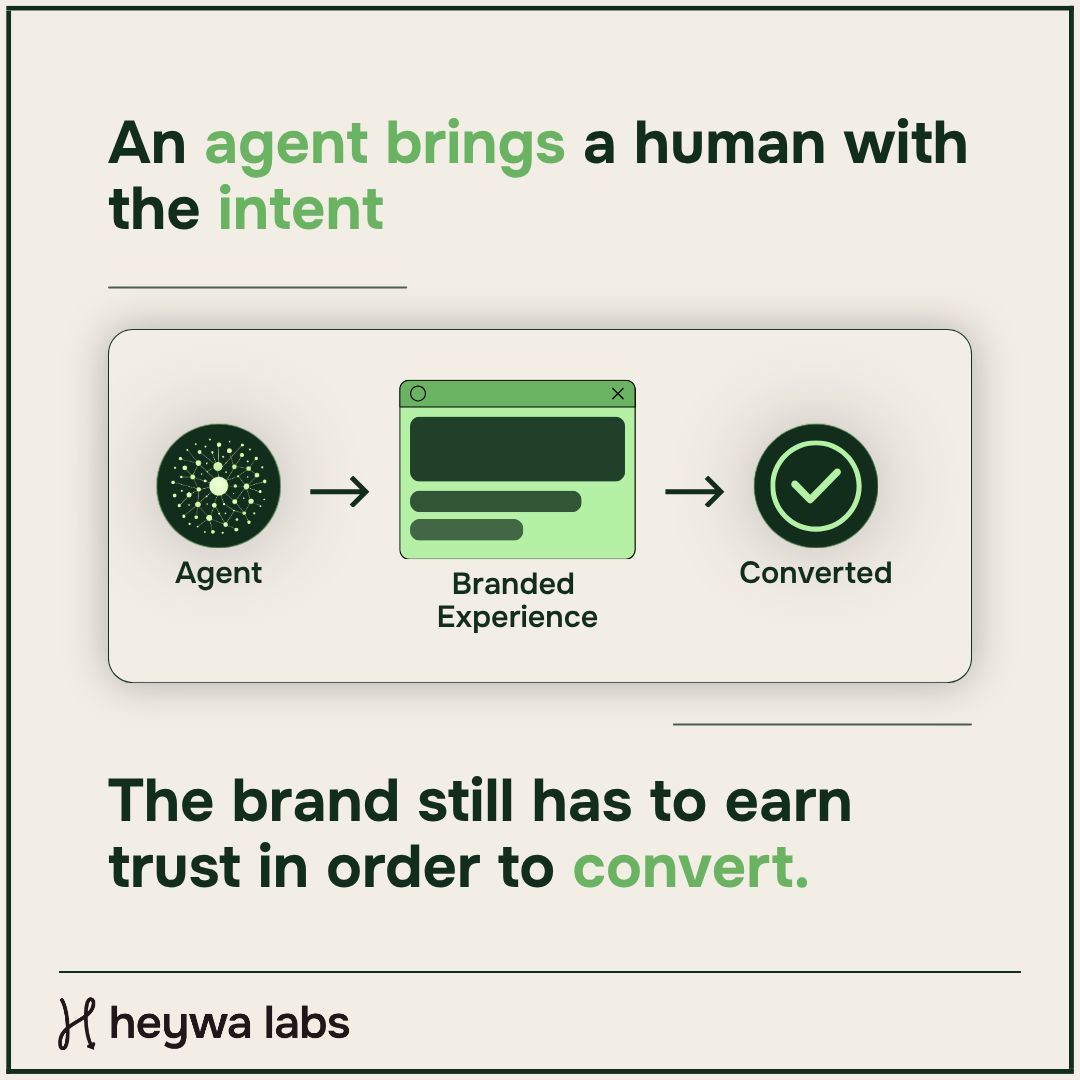
Agents can drive discovery. They do not automatically create trust.
One of the hardest problems for publishers is that discovery and retention are not the same thing.
AI systems may become powerful discovery layers. They may surface a publication, quote it, summarise it or recommend it. But that does not automatically build a direct relationship with the reader.
For a subscription publisher, this is existential. The business is not built only on being found. It is built on trust, habit, authority, voice and perceived value. A user needs to believe that the publication is worth returning to, worth paying for and worth identifying with.
A summary can answer a question. It rarely builds a habit.
This is true outside publishing too.
In retail, an AI agent might recommend a pair of running shoes. But the retailer still needs to create confidence: fit, use case, reviews, comparisons, imagery, returns, brand trust and emotional desire.
In travel, an AI agent might suggest a destination. But the travel brand still needs to help the user imagine the trip: the view from the hotel, the walk to the beach, the child-friendly restaurants, the tradeoff between convenience and charm, the feeling of being there.
In B2B software, an AI agent might say that three vendors are relevant. But the buyer still needs proof, comparison, case studies, pricing clarity, implementation confidence and a sense of whether this company understands their problem.
The agent can route intent. The brand still has to earn trust.
That is why the human experience layer does not go away. If anything, it becomes the place where differentiation happens.
When every product, article, hotel, destination, report and service can be summarised by an AI system, the question becomes: what can your owned experience do that a summary cannot?
The old web was built around pages. The new web is built around intent.
The old web was largely built around fixed surfaces.
A homepage. A category page. A search results page. A product page. An article page. A landing page. A pricing page.
Those surfaces were designed around the assumptions of the time. Users arrived through search, social, email or direct traffic. They clicked links. They browsed menus. They typed keywords. Businesses controlled the structure, and users learned to navigate it.
AI changes that because the user can express intent directly.
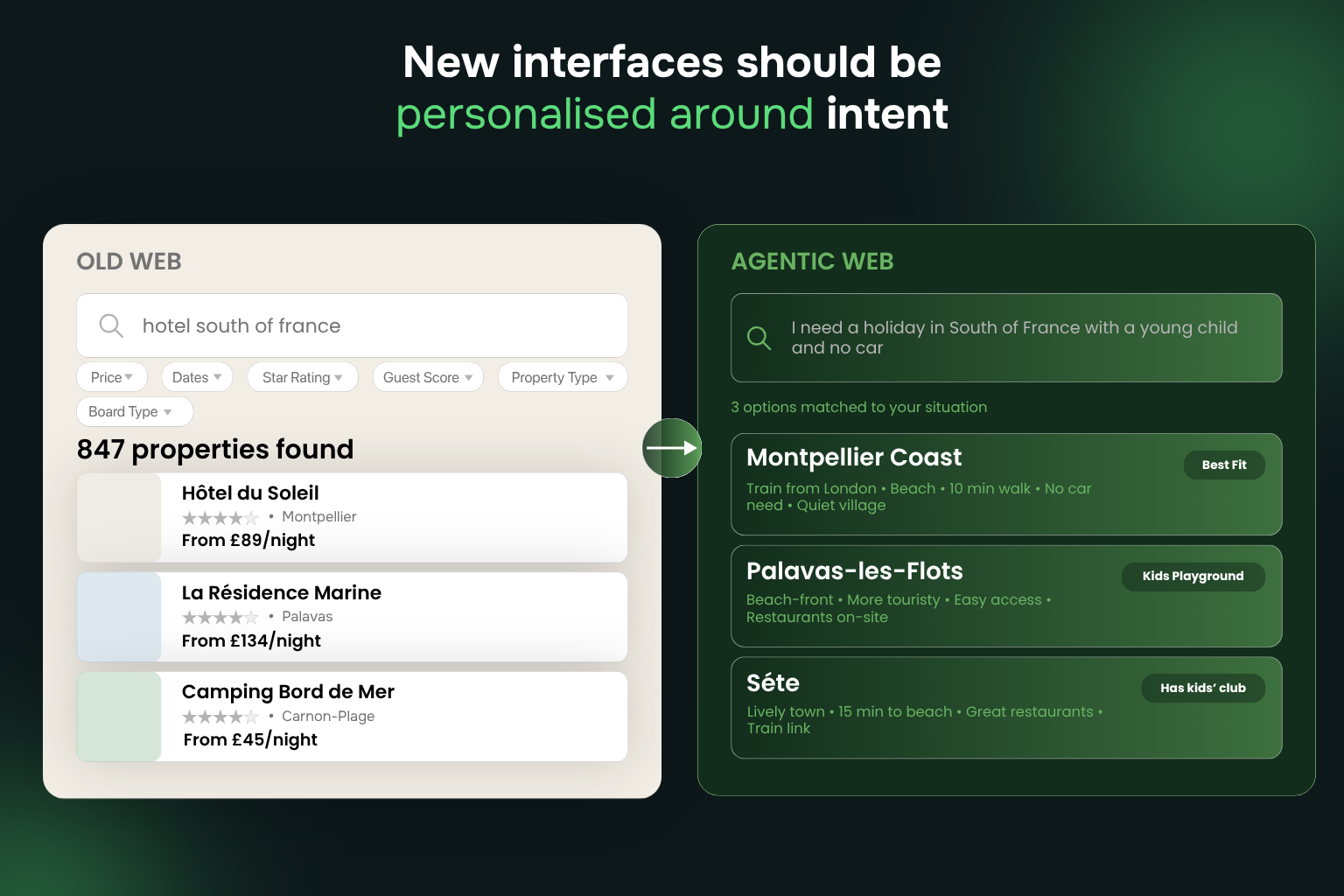
They do not need to start with “Europe family holiday hotels”. They can say, “I want a stylish European summer holiday with my five-year-old, no car, easy beach access, good food, and enough nearby things to do that I do not get bored.”
They do not need to search for “best work bags women laptop”. They can say, “I need a work bag that looks polished enough for investor meetings, fits a laptop, does not destroy my shoulder and does not make me look like I work in corporate procurement.”
They do not need to search for “Economist subscription student global politics”. They can say, “I’m trying to understand whether The Economist is the right publication for me if I’m interested in politics, economics and global affairs but only have time to read a few things a week.”
These requests are more expressive than search queries. They include context, constraints, taste, emotion and intended use.
The old web has no good native interface for this. Search boxes are too narrow. Filters are too rigid. Chatbots are often too flat. Static pages are too generic.
This is where a new kind of experience becomes important.
If the system understands the user’s intent, the interface should not be fixed in advance. It should be shaped around the task. It should choose the right structure, components, comparisons, explanations and actions for that specific journey.
For one user, the best experience may be a visual shortlist. For another, it may be a comparison table. For another, it may be a guided sequence of questions. For another, it may be a map, a reading path, a set of tradeoffs or a personalised briefing.
This is the difference between generating content and generating experience.
The two-layer web
The more I think about it, the more I believe the next version of the web has two distinct but connected layers.
The first is the agent-readable layer. This is where businesses make their content, products, services, policies, prices, availability, expertise and value propositions understandable to AI systems. It may include structured data, semantic markup, Q&A formats, APIs, feeds, canonical explanations, comparison points and clear descriptions of what the business offers.
This layer matters because agents need structure. They need to know what exists, what it means, who it is for, what constraints apply and when information is trustworthy or current. Without this, brands risk being misrepresented, ignored or flattened into generic summaries.
The second is the human-experience layer. This is where the user lands when intent has been understood. It is where the brand helps the human explore, compare, feel, trust and decide. It is where visual design, tone, interaction, sequencing, storytelling and product logic matter.
This layer matters because humans need more than answers. They need confidence. They need context. They need taste. They need to see the tradeoffs. They need to feel that the recommendation fits them.
A travel company’s agent-readable layer might describe destinations, hotels, room types, availability, amenities, transfer times, child-friendliness and cancellation policies. Its human-experience layer might turn that into an interactive trip-planning journey with maps, hotel cards, itinerary options, local recommendations and tradeoff explanations.
A retailer’s agent-readable layer might describe products, sizes, materials, fit, use cases, reviews, stock and delivery options. Its human-experience layer might turn that into a guided shopping experience for “wedding guest outfit in Italy in July” or “capsule wardrobe for a new job”.
A publisher’s agent-readable layer might describe its editorial coverage, article metadata, topic relationships, author expertise, subscription benefits and archive structure. Its human-experience layer might turn that into a personalized reading path, a briefing for a specific role or a visual guide to a complex topic.
The agent-readable layer makes the inventory understandable. The human-experience layer makes it valuable and optimised for the human at hand.
The future is not agents replacing websites
There is a simplistic version of the AI future where agents replace websites entirely. Users ask for what they want, the agent completes the task, and the web becomes a set of APIs behind the scenes.
That may be true for some categories. But it is not the whole story.
For many businesses, the website or app is not just a transaction surface. It is where the brand expresses itself, where the user builds confidence, where expertise becomes visible and where value is created.
The future is not agents replacing every interface. The future is agents routing intent into better interfaces.
Those interfaces will not look like the static pages of the old web. They will be more adaptive, more structured, more personal and more interactive. They will respond to what the user is trying to do, not just where the business has placed information in its navigation.
A user who arrives through an agent should not have to land on a generic homepage and start again. They should land in an experience already shaped around their intent.
If I ask about the best publication for understanding global affairs as a new subscriber, I should not just land on a subscription pricing page. I should land in an experience that shows me the editorial promise, the reading habit, the coverage areas, the archive, the newsletters, the voices and the value beyond summaries.
If I ask about a holiday in the South of France with a young child and no car, I should not just land on a search results page with filters. I should land in a planning experience that understands my constraints and shows the tradeoffs.
If I ask for a polished work wardrobe for a new leadership role, I should not just land on a category page. I should land in a guided discovery experience that helps me build confidence.
That is what the agentic web should feel like. Not less interface. Better interface.
The brands that win will be agent-legible and human-native
The next few years will likely create a new kind of digital hygiene. Businesses will need to make their content and inventory understandable to AI systems. This will become as normal as SEO, structured data, feeds, APIs and performance analytics.
But that will quickly become table stakes. If every serious brand becomes agent-readable, then agent-readability alone will of course not be the differentiator. It will be the baseline.
The differentiator will be what happens next. When the agent finds you, what does the user experience? Do they see a generic page, a static list, a paywall, a chatbot or a wall of text? Or do they see an experience that understands their intent and helps them move forward?
The brands that win will not be the ones that choose between agents and interfaces. They will be the ones that connect the two. They will make their inventory structured enough for agents to understand and their experiences rich enough for humans to care.
They will be agent-legible underneath and human-native on top.
That, to me, is the more interesting future of the web. Not a web where agents consume everything and humans disappear from the loop. A web where agents understand intent, and the best brands turn that intent into experiences worth staying for.